GLOBALG.A.P. Chain of Custody
Core solution

GLOBALG.A.P. Chain of Custody

The GLOBALG.A.P. Chain of Custody (CoC) standard aims to establish procedures that help ensure any product sold with a GLOBALG.A.P. claim or bearing a GGN label logo is truly sourced from a GLOBALG.A.P. certified production process.
Key documents

Facilitating transparency from farm to retailer

What is GLOBALG.A.P. Chain of Custody?

GLOBALG.A.P. Chain of Custody (CoC) allows supply chain stakeholders to demonstrate management systems that seek to protect the segregation, identification, and traceability of products originating from GLOBALG.A.P. certified production processes. This way, products produced in line with certified farm-level processes can be connected with a GLOBALG.A.P. claim at the end of the chain – reducing integrity risks, providing reassurance to customers, and adding value to a brand in the market. Applicable to products originating from production processes certified to the Integrated Farm Assurance (IFA) or Compound Feed Manufacturing (CFM) standards, CoC is tried, tested, and trusted around the world, with certificate holders operating in over 60 countries.

CoC at a glance

Applies to a wide range

of types and sizes of supply chain companies – from packers and processors to retailers and restaurants

Connects certified

farming practices with a transparent GLOBALG.A.P. claim at the end of a custodial sequence

Reduces risk

of substitution, dilution, and misidentification of products originating from GLOBALG.A.P. certified production processes

Relevant for supply chain

companies sourcing from IFA- or CFM-certified production processes

Establishes consistent

certification requirements and monitoring tools, mitigating the risk of food fraud or traceability issues

Covers all products

under the IFA scopes of plants and aquaculture, and animal feed produced under CFM

Applies to a wide range

of types and sizes of supply chain companies – from packers and processors to retailers and restaurants

Connects certified

farming practices with a transparent GLOBALG.A.P. claim at the end of a custodial sequence

Reduces risk

of substitution, dilution, and misidentification of products originating from GLOBALG.A.P. certified production processes

Relevant for supply chain

companies sourcing from IFA- or CFM-certified production processes

Establishes consistent

certification requirements and monitoring tools, mitigating the risk of food fraud or traceability issues

Covers all products

under the IFA scopes of plants and aquaculture, and animal feed produced under CFM

What is a GLOBALG.A.P. claim?

A GLOBALG.A.P. certification claim must only be communicated when a product originates from a GLOBALG.A.P. certified production process and is covered by a valid GLOBALG.A.P. certificate at all upstream stages of the supply chain. For recognition by Agraya GmbH, a certification claim is only considered valid when the GLOBALG.A.P. Number (GGN) or Chain of Custody Number (CoC) is accompanied by certification status information of the respective products on sales or commercial documents.

This ensures that buyers can trust the origin of the product via farm-level certification (such as the GLOBALG.A.P. Integrated Farm Assurance (IFA) standard) and that the subsequent custodial sequence meets supply chain requirements that safeguard product integrity (such as the GLOBALG.A.P. Chain of Custody (CoC) standard).

The 13 digit GLOBALG.A.P. Number (GGN) itself is not a registered trademark, and as such, is not restricted in general use. In addition, although the GGN serves as an identifier of a GLOBALG.A.P. certified producer within the GLOBALG.A.P. IT platform, the mere presence of a GGN number on a product label does not, by itself, imply that the product holds GLOBALG.A.P. certification status.

Which topics does CoC address?

International supply chains contain multiple stages. This means that not all supply chain companies source directly from producers with GLOBALG.A.P. certification. CoC is designed to identify products originating from GLOBALG.A.P. certified production processes and safeguard this status at every stage of the supply chain.

CoC is built on five key principles:

  1. Supply chain companies must purchase products with a GLOBALG.A.P. claim from certified suppliers.

  2. Products originating from GLOBALG.A.P. certified production processes must be separated from products originating from noncertified production processes at all times.

  3. Products originating from GLOBALG.A.P. certified production processes must be clearly identified.

  4. Products originating from GLOBALG.A.P. certified production processes must be traceable.

  5. The company management system must ensure compliance with the CoC requirements. 

Continuously improved through collaboration with sector experts and our worldwide network of GLOBALG.A.P. Community Members, our approach to standard setting ensures that CoC remains robust, realistic, and cost-efficient while meeting evolving market demands.

Core topics in CoC v6.1 include:

  • Management structure

  • Retail store/Restaurant management structure

  • Input and output verification

  • Traceability

  • Identification and labeling

  • Identification and display

  • Products with the GGN label visual elements

  • Aquaculture products

  • Animal welfare

  • Food safety and exceedances

Discover more about how CoC helps you address supply chain challenges.

Who should use CoC?

CoC is an essential tool for any company handling or trading in products originating from GLOBALG.A.P. certified production processes. The standard applies to a wide range of types and sizes of companies in the supply chain that sell products with a GLOBALG.A.P. claim, including subcontractors who handle the products:

  • Producers

  • Packers

  • Brokers

  • Processors

  • Logistics companies

  • Retailers

  • Restaurants

The standard covers all products under the IFA scopes of plants and aquaculture, as well as animal feed produced under the CFM standard.

CoC certification is available for companies (legal entities) under Option 1, meaning that if the company operates more than one site, all sites must be audited individually.

Stakeholders to which CoC certification does not apply

How does CoC work?

  • Compliance with the standard requirements is audited annually by an accredited and independent third-party certification body (CB).

  • Companies can choose from any GLOBALG.A.P. approved CB active in the relevant country

  • A successful CB audit results in a certificate valid for one year. 

The standard is composed of control points and compliance criteria (CPCCs). CPCCs are graded in three levels: Major Must, Minor Must, and Recommendation.

Control points

  • Fundamentals that set the foundation of a GLOBALG.A.P. requirement

  • Written in question form

Compliance criteria

  • Methods that producers can use to demonstrate a control point to be true

  • Evidence required for demonstrating that the outcome is achieved

Read more about the audit process and standard requirements.

How is certification status verified?

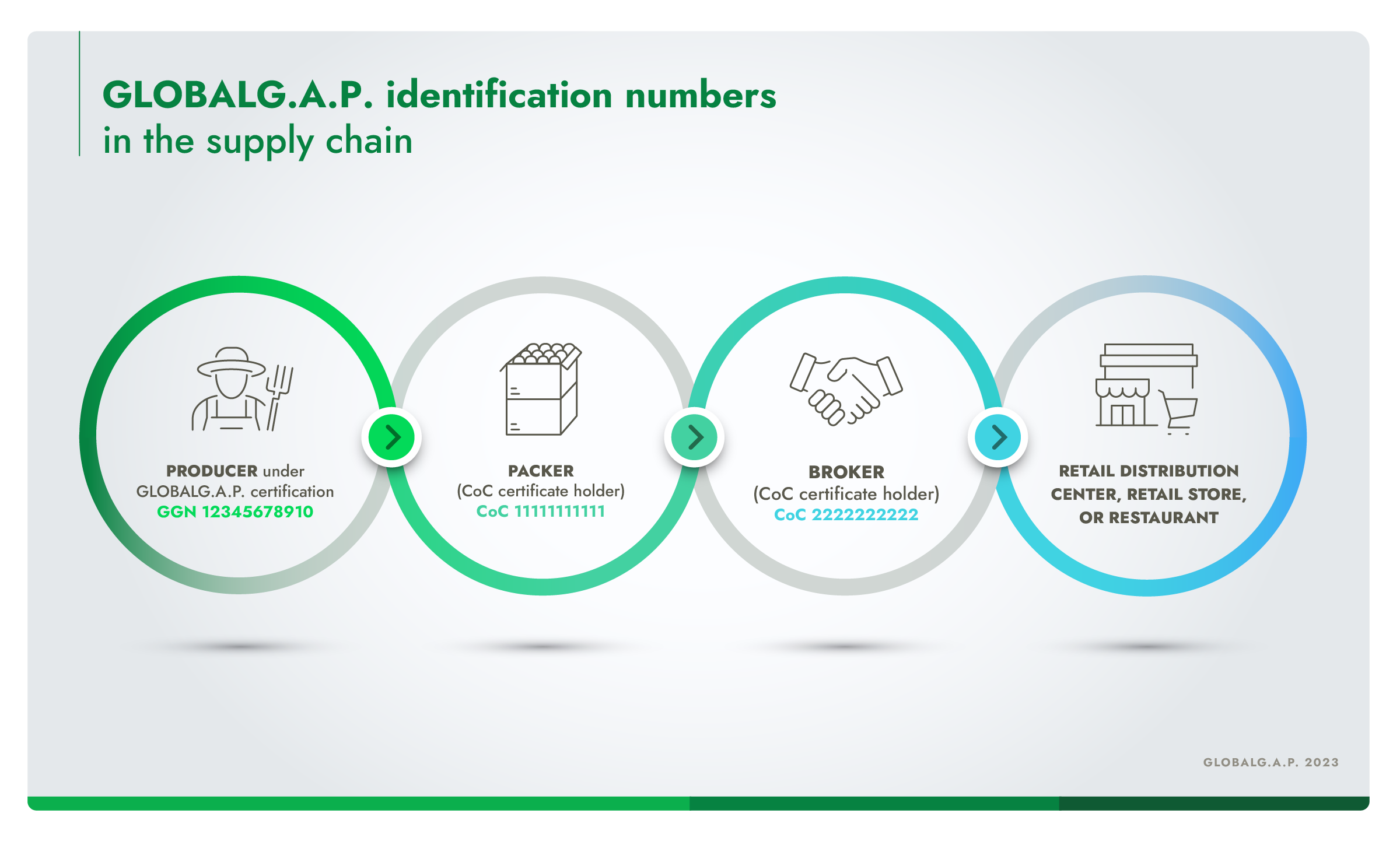
Every supply chain company registered in the GLOBALG.A.P. certification system is assigned a 13-digit GLOBALG.A.P. identification number such as a GLOBALG.A.P. Number (GGN) or a CoC Number. A GGN is linked to a producer (any activity related to IFA or CFM), while a CoC Number is linked to a company with CoC certification (any activity related to the supply chain).

These numbers are linked to a legal entity – a producer or supply chain company – for as long as that entity exists. This allows verification of certification status in the GLOBALG.A.P. IT platform, upholding our rigorous transparency requirements throughout the supply chain.

Supply chain stakeholders can control data access and privacy rights for audit reports, and the reports are not shared publicly or with third parties. This process is handled via your chosen CB.

Combined CoC audits

As part of our mission to reduce duplication in supply chains, we have worked in collaboration with other certification schemes to offer combined audits with the GLOBALG.A.P. CoC standard.

The following options are not GLOBALG.A.P. benchmarked schemes, but offer a combined audit approach designed to save resources by auditing only the parts of the CoC checklist that are not covered by the below standards:  

  • CoC through BRCGS BRCGS Food Safety standards 

  • CoC through IFS IFS Food Safety standards 

  • CoC through QS QS Wholesale Fruit, Vegetables, Potatoes 

  • CoC through AMA AMA Quality Seal Guideline “Fruits, Vegetables, Potatoes” 

Only GLOBALG.A.P. approved CBs may conduct the CoC combined audits, and a successful audit will result in two separate certificates. Certification status is then visible in the GLOBALG.A.P. IT platform for transparency in the market. 

Corporate news and events have moved!

All the latest updates can now be found on the Agraya website – connecting people, ideas, and solutions across the global farming network.

Looking for technical news?

Technical news updates for core solutions can be found in our technical news libraries.

Making responsible farming visible to consumers

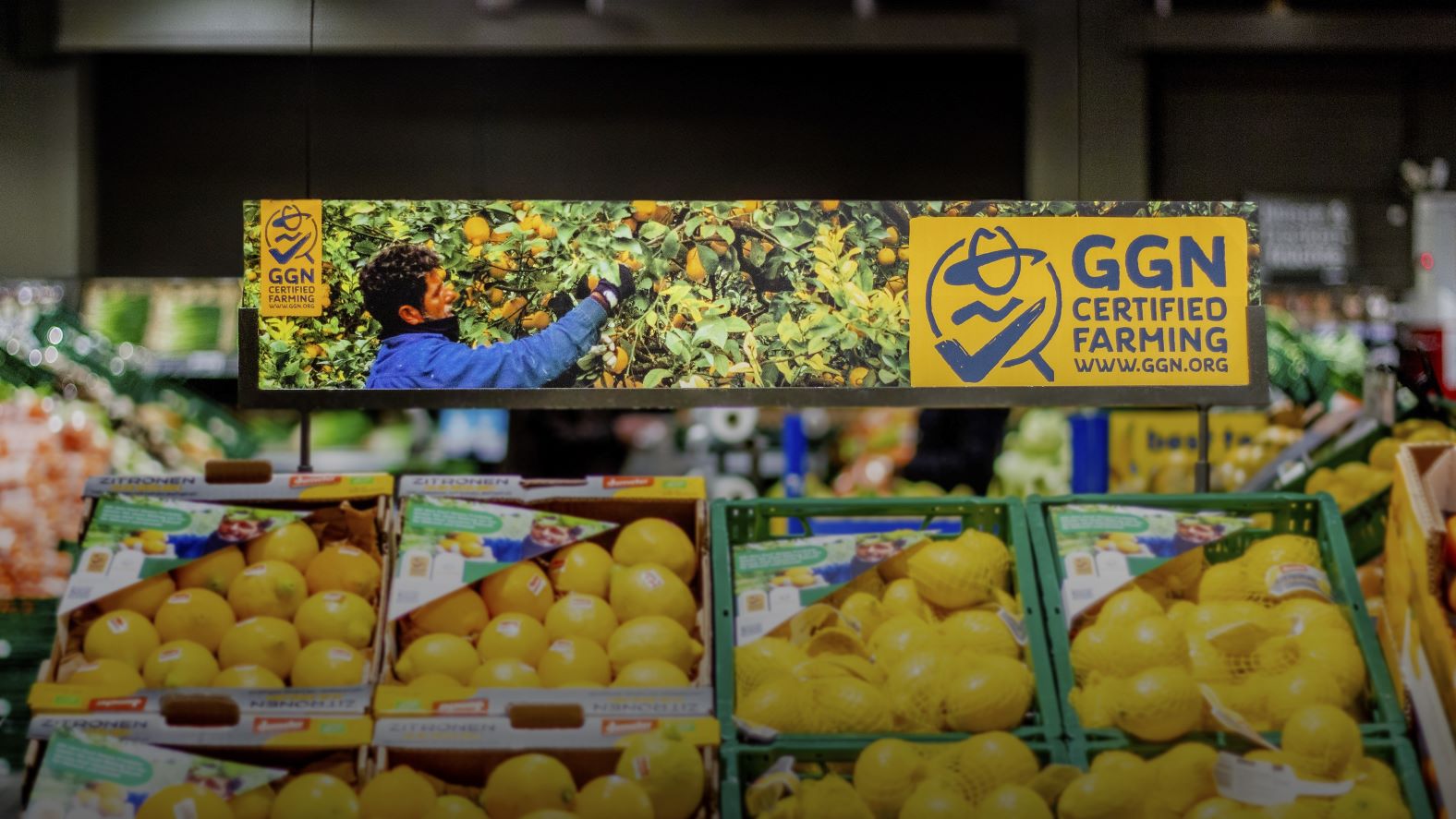
CoC certification is one of the requirements for using the GGN label – a consumer label for certified, responsible farming and transparency found on fruit and vegetables, farmed seafood, flowers, and plants. Improve your competitive edge and grow trust in your brand by making responsible farming visible on store shelves!

Safeguard supply chain integrity

Why choose GLOBALG.A.P. Chain of Custody?

GLOBALG.A.P. Chain of Custody (CoC) certification strives to protect the integrity of products originating from GLOBALG.A.P. certified production processes. Requested by buyers across the globe, the standard outlines a practical path for supply chain companies to implement and demonstrate management systems for the handling and trading of these products. CoC therefore helps mitigate reputational risks and builds confidence in increasingly complex global value chains.

Which industry challenges does CoC address?

  • Implementing safer and more responsible farming practices is a core demand of retailers and consumers around the world.

  • Achieving recognition for these practices through certification takes significant time, effort, and investment from producers at farm level.

  • However, the value of responsible farming practices is significantly reduced if they cannot be transparently linked to a GLOBALG.A.P. claim at the end of the supply chain.

  • If segregation and traceability are lacking, the reputational risk for buyers increases – through food fraud or the inability to trace a product if, for example, a food safety issue arises.

  • Supply chain companies therefore need consistent certification requirements and monitoring tools to ensure that the integrity of products is protected up to the final sale.

  • As global supply chains grow in complexity, CoC certification provides reassurance to customers and adds value to a brand in the market.

Follow our five steps to certification to get started today.

CoC in numbers (as of 31/12/2024)

5,137

companies under certification

65

countries with CoC certificate holders

153

traders with CoC certification participating in the GGN label initiative

5,137

companies under certification

65

countries with CoC certificate holders

153

traders with CoC certification participating in the GGN label initiative

What are the benefits for supply chain companies?

  • Reduce the risk of substitution, dilution, and misidentification of products originating from GLOBALG.A.P. certified production processes

  • Improve segregation methods and traceability systems in the supply chain

  • Enable a quick response if issues arise through transparency and risk monitoring

  • Reflect the certified company’s commitment towards safer and more responsible farming practices

  • Apply the standard to a wide range of types and sizes of supply chain companies globally

  • Add value to brands in the market and provide assurance to customers

A few years ago, we started our path with GLOBALG.A.P. CoC certification. It has certainly helped us to strengthen our policies and has opened doors for us to work with certain clients. Both GLOBALG.A.P. and our CB have been supporting us with any doubts that have arisen, making the certification process easy and agile.

Victor Abad Lopez

Quality and Food Safety Head Manager at Compesca | Spain

Maintaining trust in GLOBALG.A.P. certification

The GLOBALG.A.P. Integrity Program was founded in 2008 as the first of its kind in food certification. Designed to ensure the consistent delivery and implementation of GLOBALG.A.P. standards and add-ons worldwide, the program monitors and assesses all aspects of the third-party certification process.

Which solutions can be combined with CoC?

We offer a range of standards and add-ons targeted to specific aspects of production and the supply chain.

Learn more about GLOBALG.A.P. smart farm assurance solutions.

Your guide to implementation

How to prepare for a GLOBALG.A.P. Chain of Custody audit

Learn more about the key documents and fee structure of GLOBALG.A.P. Chain of Custody (CoC). Follow our five steps to certification for an overview of the certification process, and find a GLOBALG.A.P. approved certification body (CB) in your area to get started.

Specific requirements for supply chain companies

Implementation and CB audit process

How does the CB audit process work?

  • CoC compliance is audited annually by accredited and independent third-party CBs.

  • Companies can choose from any GLOBALG.A.P. approved CB active in the relevant country.

  • A successful CB audit results in a certificate valid for one year.

  • The CB is responsible for uploading the audit report and maintaining the accuracy of company data in the GLOBALG.A.P. IT platform.

  • Companies will be audited annually by a CB as part of the renewal process.

Which documents are required?

  • GLOBALG.A.P. general regulations: Rules that define how the certification process works, from the scope of the standard to the audit requirements.

  • Control points and compliance criteria (CPCCs): Control points are the fundamental requirements for each standard. They are written in question form and are accompanied by corresponding compliance criteria that detail the various ways in which a company can demonstrate compliance.

  • Checklist: The full list of CPCCs as used by CB auditors, enabling companies to conduct a self-assessment in preparation for the CB audit.

Which version of CoC is currently valid?

CoC v6.1 is the only valid version currently available for certification. It was published in November 2022 and replaced v6 on 1 July 2023.

The FAQ contains more information on documents, certification renewal, and more.

What are the CoC standard requirements?

CPCCs are graded in three levels: Major Must, Minor Must, and Recommendation.

  • To achieve certification, companies must comply with 100% of the Major Musts and at least one of the two Minor Musts.

  • Corrective actions must be proposed for all non-compliances and submitted to the CB within the specified period.

  • Non-compliances must then be verified as corrected and compliant by the CB before a certificate can be issued.

How much does CoC certification cost?

Each company is unique, and the total costs of certification depend on a combination of factors such as company size, number of sites, location, necessary preparation measures (such as establishing new procedures), and more. CoC contains three cost elements:

  1. Implementation costs: Incurred by the company to prepare for the CB audit

  2. CB service fees: Determined and invoiced by the CB to cover audit time and travel costs

  3. GLOBALG.A.P. registration and certificate license fees: Annual fee invoiced by the CB for each registered and certified company

The GLOBALG.A.P. fee table contains full information on the fee structure for each standard and add-on.

Five steps to certification

You will need the CoC general regulations, the CoC CPCCs, and the checklist. All of the required documents are available online, for free, and in multiple languages. They are linked below and can also be found in the GLOBALG.A.P. document center.

Train staff and nominate your company’s CoC representative. Use the documents to guide the implementation of the standard requirements, and then conduct a self-assessment using the checklist. Our worldwide network of Registered Trainers can also provide assistance during audit preparations.

Search the list of GLOBALG.A.P. approved CBs by region, country, scope, and status. Contact the CB of your choice and request an audit. Note that the GLOBALG.A.P. fee table does not cover CB service fees such as audit time or travel costs to your site.
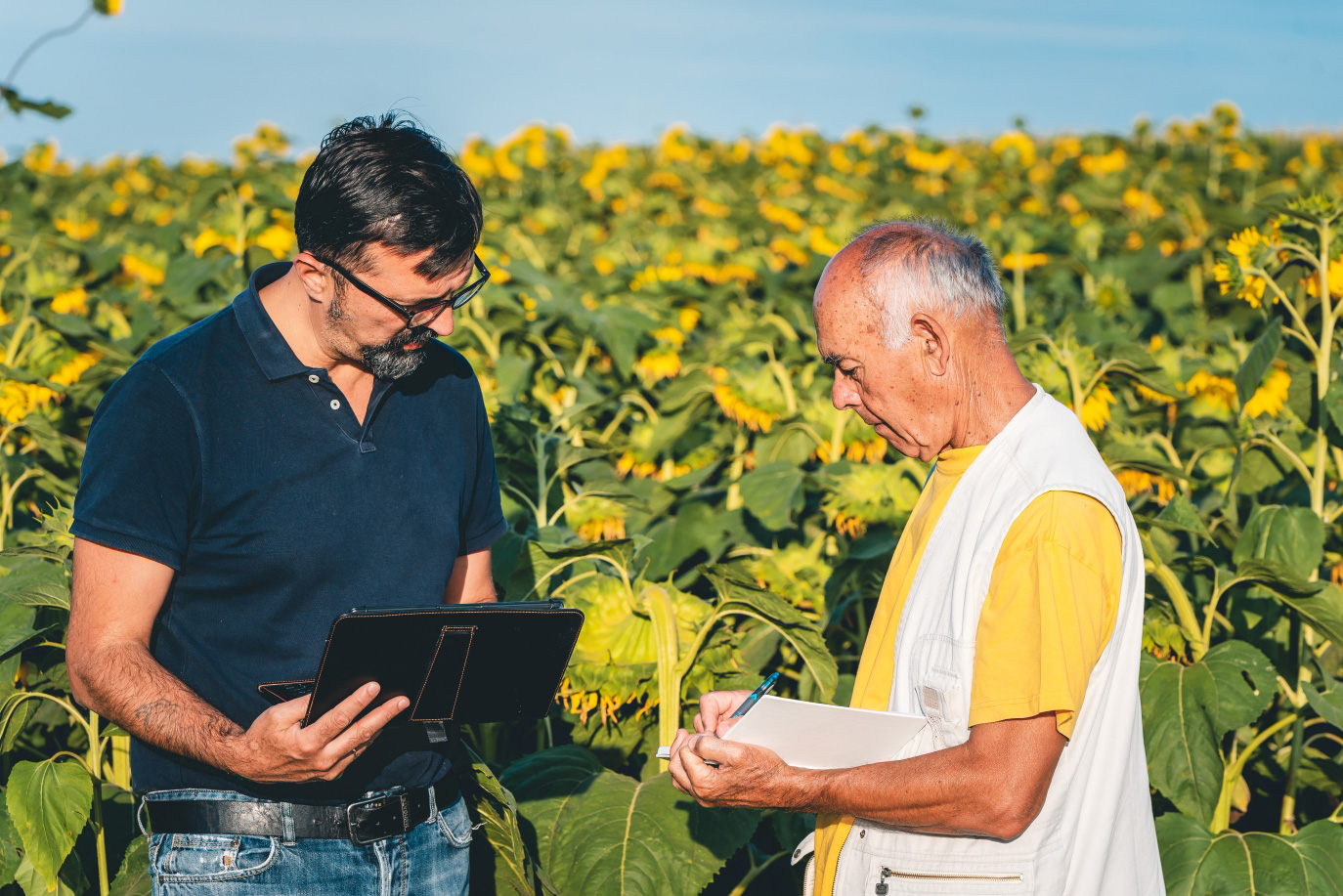
The CB will conduct the audit and upload the results to the GLOBALG.A.P. IT platform. Any non-compliances which are detected during the CB audit must be corrected within the specified period and verified by the CB before a certificate can be issued.

Once all requirements are met and verified by the CB, they will issue your CoC certificate. Your certification status is then publicly visible in the GLOBALG.A.P. IT platform for transparency in the market.

Key documents

The three most relevant documents are linked below. Click ‘view more’ to see further related documents. Remember to always check with your CB that you have all necessary documents prior to audit.

CoC
GLOBALG.A.P. Chain of Custody (CoC)
CoC

GLOBALG.A.P. general regulations

Version V6.1

English | Last updated: 17/11/2022

PDF, 813KB

GLOBALG.A.P. general regulations outline the framework of the certification system, including the role and relationship of the GLOBALG.A.P. Secretariat and certification bodies, and provide context for implementing checklist content.

GLOBALG.A.P. Chain of Custody (CoC)
CoC
GLOBALG.A.P. Chain of Custody (CoC)
CoC

Principles and criteria

Version V6.1

English | Last updated: 17/11/2022

PDF, 717KB

Principles and criteria are a complete list of the requirements for a given standard or add-on. The foundational requirements each detail an outcome that must be achieved, and the corresponding ways in which compliance can be demonstrated.

GLOBALG.A.P. Chain of Custody (CoC)
CoC
GLOBALG.A.P. Chain of Custody (CoC)
CoC

Checklists

Version V6.1

English | Last updated: 11/12/2022

XLSX, 364KB

Checklists are documents containing standard/add-on principles and criteria which are used during the audit/assessment to check whether compliance is achieved. They may also be used to conduct self-assessments.

GLOBALG.A.P. Chain of Custody (CoC)

Capacity building

Need assistance with the certification process? Our capacity-building program offers a range of options for training, consultation, and more!

A brief history of CoC

2004–2009

CoC development begins in 2004, and version 1 of the standard – applicable to aquaculture products only – is published in June 2005. The standard is revised and CoC v2 is launched in May 2008.

2010–2012

CoC v3 is released in January 2010, expanding the scope of products covered to include tea and coffee. CoC is made mandatory from the first postharvest processing step.

2013–2014

In 2013, CoC v4 is expanded to include fruit and vegetables, flowers and ornamentals, and more, in addition to aquaculture and livestock. In 2014, public consultation takes place for the revised CoC v5, which is launched in December.

2015–2019

By 2016, there are almost 500 CoC certificate holders. This number rises to 749 in 2017, handling more than five million metric tons of plants and two million metric tons of aquaculture products. By 2018, the number of CoC certificate holders passes 1,000, with certified companies in 38 countries. CoC v6 is published in September 2019, and by the end of the year, there are 1417 certificate holders across 45 countries worldwide.

2020–2023

The revision process for CoC v6 is initiated in 2021, and v6.1 is published in November 2022. It replaces v6 in July 2023. On 1 January 2023, new rules for supply chains are introduced, making CoC certification obligatory for all parties handling, packing, or labeling loose, unpacked products originating from GLOBALG.A.P. certified production processes.

After this date, Agraya GmbH (formerly FoodPLUS GmbH) reserves the right not to conduct a full investigation on traceability problems or maximum residue limit exceedances connected to products with a GLOBALG.A.P. claim if the supply chain in question does not have full CoC certification at every step. 

By the end of 2022, there are 3,342 CoC certificate holders in 55 countries, with this number rising to 4,274 certificate holders in 62 countries in 2023.

2024

The number of CoC certificate holders continues to rise in 2024, reaching 5,137 across 65 countries.

FAQ

Contact us

For technical or interpretation advice on GLOBALG.A.P. standards, please contact standard_support@agraya.com.

For questions about the audit process or GLOBALG.A.P. IT platform, please contact stakeholder_helpdesk@agraya.com.